In the first days after a vaginal delivery, it usually hurts because pee is passing over skin that is sore and healing, and that kind of pain fades as the healing does. The more useful question than how to stop it is which pain yours is, because the outside sting and the inside burn have different answers.
One of them you can beat tonight with water, used in two directions. The other one is a phone call. Telling them apart takes about a day of paying attention, and this post is the paying attention.
Which pain is this?
The sting arrives with the pee and leaves with it. It lives on the outside, wherever you are sore or stitched, and its trajectory points down: a little less awful each day, tracking the soreness it belongs to.
The burn is a different animal. The line ACOG draws around it is pain or burning during urination that is severe, or that continues more than a few days after delivery. Severe now, or still there when the soreness story says it should be fading. Either version has stopped being a side effect of healing and started being its own event.
There is a third door, and it comes first. ACOG describes the first days after a vaginal delivery as a time when you may feel the urge to urinate but not be able to pass any urine. If nothing will come out at all, that is not a patience project. The NHS files finding it really difficult to pee under tell your midwife, and the American translation is to contact your provider today.
With my first, I never asked which pain I had. I assumed all of it was the price of the delivery and my job was to endure it quietly, which meant I collected exactly none of the information that would have told me I was fine. I was fine, as it happened. I just spent two weeks not knowing it.
Water in both directions
Direction one goes into you. The NHS puts it plainly: drinking lots of water dilutes your urine, which may make it sting less. Concentrated pee is harsher on a raw spot, so the water you drink in the afternoon is quietly deciding how the evening bathroom trip goes.
I ran this exactly backwards after my first. My private math said fewer drinks meant fewer trips, and fewer trips meant less pain, so I rationed water like it was the enemy. What I actually built was rarer, darker, angrier pee, and I want those weeks back.
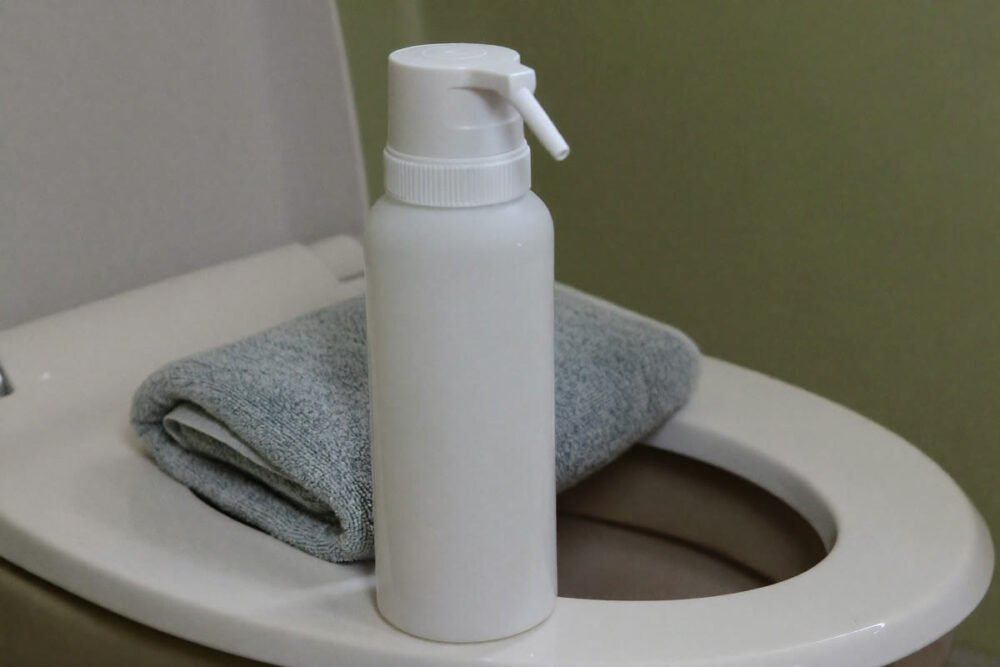
Direction two goes over you. ACOG’s list for the sore version is short and physical: spray warm water over your genitals with a squeeze bottle while you are on the toilet, which can also help trigger the flow. Run the tap while you are in there. Try a sitz bath, which is just sitting in warm, shallow water. Pat dry instead of wiping.
Nobody mentions that the squeeze bottle has a temperature. The first time I used mine I filled it straight from the cold tap, once and never again. Warm water is the entire trick, and warm means you check it on your wrist like it matters, because it does.
None of this is elegant. You are a person spraying yourself with a plastic bottle while the faucet runs theatrically in the background. It works anyway, and by the second day it stops feeling absurd and starts feeling like equipment.
When the burning is the story, not the pee
Some signals take the decision out of your hands, and they are worth knowing before you need them.
On ACOG’s call-right-away list, three items live in this territory: the severe or lingering burning from above, a fever of more than 100.4°F, and vaginal discharge that smells bad. The NHS puts feeling very sore and noticing an unpleasant smell on its tell-your-midwife list, which is the same instinct wearing British punctuation.
Notice what is not on those lists: how tough you are, how busy the baby is, whether it feels rude to call about a bathroom problem. The lists are about trajectory. Healing moves in one direction, and anything moving the other way, getting worse instead of better, is not a thing you owe more patience.
What to set up before the next time you go
The bottle gets filled before you need it, with warm water, and it lives next to the toilet, not in the hospital bag. A drink with a lid stays within reach of wherever you feed the baby, because the water you did not drink is the sting you meet later.
With my second, I set up nothing, on the theory that I had done this before and my body would produce the same recovery on schedule. It did not. Every delivery writes its own bathroom chapter, and the setup costs five minutes precisely because you do it before things hurt.
Two neighbors of this problem deserve their own reading. The first bowel movement has its own fear attached, mostly undeserved, and we walked through it in the first poop after birth. And the small leaks are their own subject: the NHS calls leaking a bit of pee when you laugh, cough or move suddenly quite common after a baby, says pelvic floor exercises can help, and points anything that is not improving at your postnatal appointment. That visit is the built-in place to say all of this out loud, and the six week checkup goes better with a list you wrote in advance.
Put this post’s question on that list too, if it is still open by then. Which pain is this is a question your provider can actually answer, and you will have the data, because you were there every time.
The short version
- First question: which pain. An outside sting that eases as I heal, or a burn that is severe or refusing to leave.
- The sting loses to water twice. Into me all day, and over me at the exact moment it matters.
- If I cannot pee at all, that is a same-day call, not a coping project.
- Burning that stays or worsens, a fever, a smell that is new: phone, without auditioning my toughness first.
- The bottle gets filled warm, before I need it, and it lives where the problem lives.
Sources
- American College of Obstetricians and Gynecologists, “Postpartum Pain Management”, ACOG FAQ
- NHS, “Your body after the birth”, NHS pregnancy guide, page last reviewed 25 April 2024
A note on this post. Written and edited by the NewBloom editorial team. NewBloom is not written by doctors, nurses or midwives, and nothing here is medical advice. We read the current guidance from bodies like ACOG, the CDC and the NHS and write down what it says, with every claim traced to its source and named in the sentence where it appears. General guidance is not the same as an answer about your own body. Your doctor, midwife or health visitor can examine you and we cannot, so anything here that raises a question about your own recovery is a reason to ask them. If something is wrong right now, contact your doctor or your local emergency number. More about how we write these posts.